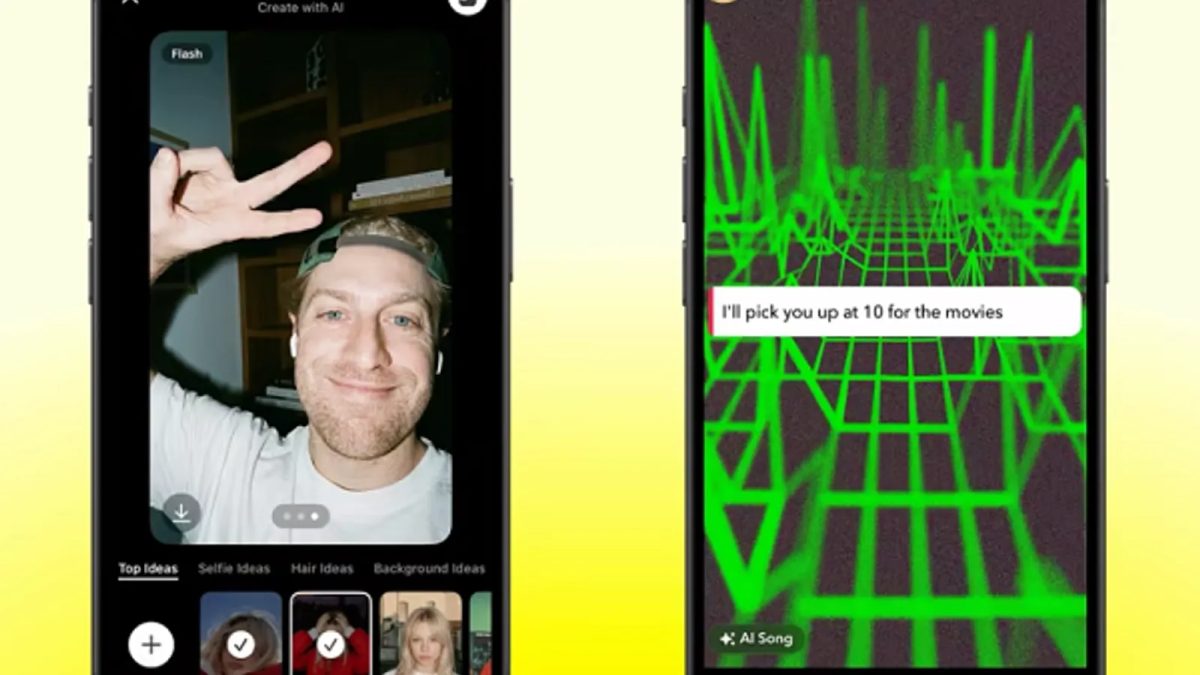

Snapchat is quietly turning its chat interface into a creative playground. The company just announced a set of new artificial intelligence features that let users transform their typed messages into songs and edit images before sharing them with friends. The catch? These tools are reserved for Lens+ subscribers, the company’s paid tier that keeps expanding its perks.
If you have ever typed a random thought and wished it could sound like an actual track, Snapchat is about to make that happen. The chat-to-song feature takes your text and, with a tap, generates a short musical clip. It is a bit like having a tiny producer living inside your messaging app, ready to turn “I’m hungry” into a lo-fi hip-hop loop or a dramatic ballad. The exact mechanics remain under wraps, but the promise is clear: your conversations are about to get a lot more musical.
Why Chat-to-Song Matters for Social Messaging
Converting text to music is not just a gimmick. It taps into a growing desire for personalized, expressive content that stands out in a sea of plain text bubbles. Think about how often you send a boring “ok” or “lol” and wish you could add some flair. Now imagine sending a custom jingle instead. That is the kind of creative shorthand Snapchat is betting on.
For developers and tech watchers, this signals a deeper integration of generative AI into everyday communication. We have seen AI write emails and summarize articles, but turning casual chat into songs is a different beast. It requires models that understand rhythm, melody, and mood, all while keeping latency low enough for real-time use. Snapchat has not detailed the underlying architecture, but the feature likely relies on lightweight neural networks optimized for mobile devices.
Image Editing Gets an AI Boost
The second feature, AI-powered image editing, is arguably more practical for daily sharing. Subscribers will be able to tweak their snaps before sending them, perhaps by removing unwanted objects or enhancing colors with a simple prompt. It is similar to what other platforms offer, but Snapchat’s approach emphasizes speed and seamlessness within the chat flow. No need to export to a separate editor; the magic happens right where you are typing.
This move also puts pressure on rival apps like Instagram and TikTok, which have been adding AI tools of their own. Snapchat’s differentiator is its ephemeral, conversation-first design. Editing an image that will disappear in seconds feels less precious and more playful, which could encourage riskier, more experimental creativity. That is a smart angle for a platform that thrives on spontaneity.
The Subscriber Strategy Behind the AI Features
Why limit these features to Lens+ subscribers? The answer is simple economics. Snapchat has been steadily building out its paid offerings to diversify revenue beyond advertising. By bundling exclusive AI tools with other perks like custom app icons and story rewatches, the company makes a stronger case for that monthly fee. It is a classic freemium play: give away the basics, charge for the magic.
For users who already pay for Lens+, these additions feel like a genuine bonus rather than a cash grab. For everyone else, they serve as a tempting nudge. The question is whether song generation and image editing are compelling enough to convert free users into subscribers. Given how much time people spend crafting the perfect message, the answer might be yes, especially among younger demographics who value novelty and self-expression.
What This Means for the Future of AI in Chat Apps
Snapchat’s latest update is part of a broader trend: AI is moving from standalone tools into the fabric of our conversations. We are not just using AI to write or draw; we are using it to remix, reimagine, and remix again. This raises interesting questions about authorship and originality. If your friend sends you a song made from their words, who owns that melody? Snapchat’s terms of service probably have an answer, but the cultural conversation is just beginning.
From a technical standpoint, running these features on a massive scale requires serious infrastructure. Generating music and editing images on the fly demands GPU power and efficient caching. Snapchat has not shared whether processing happens on-device or in the cloud, but a hybrid approach seems likely. On-device models would reduce latency and improve privacy, while cloud models allow for more complex outputs. Either way, the engineering challenge is substantial.
Looking ahead, expect more platforms to follow suit. The line between messaging and content creation is blurring, and AI is the catalyst. Snapchat may not be the first to offer these features, but its focus on ephemeral, casual communication could make them stick. After all, what is more ephemeral than a song that disappears after one listen? That playful impermanence might just be the killer app for AI in social media.