
Running a competitive analysis for social media used to feel like assembling a jigsaw puzzle in the dark. You collect posts, export spreadsheets, hand-tag themes, and then spend hours comparing benchmarks. It is a slow, manual grind that leaves little room for actual strategy. That is where artificial intelligence enters, not to replace your judgment, but to shrink the grunt work.
AI transforms competitive analysis from a periodic reporting exercise into a continuous decision-making habit. Instead of waiting for a monthly audit, you can spot shifts in real time and ask better questions the moment a competitor changes format or cadence. The goal is not automation for its own sake. It is speed, clarity, and more time to decide what to do next.
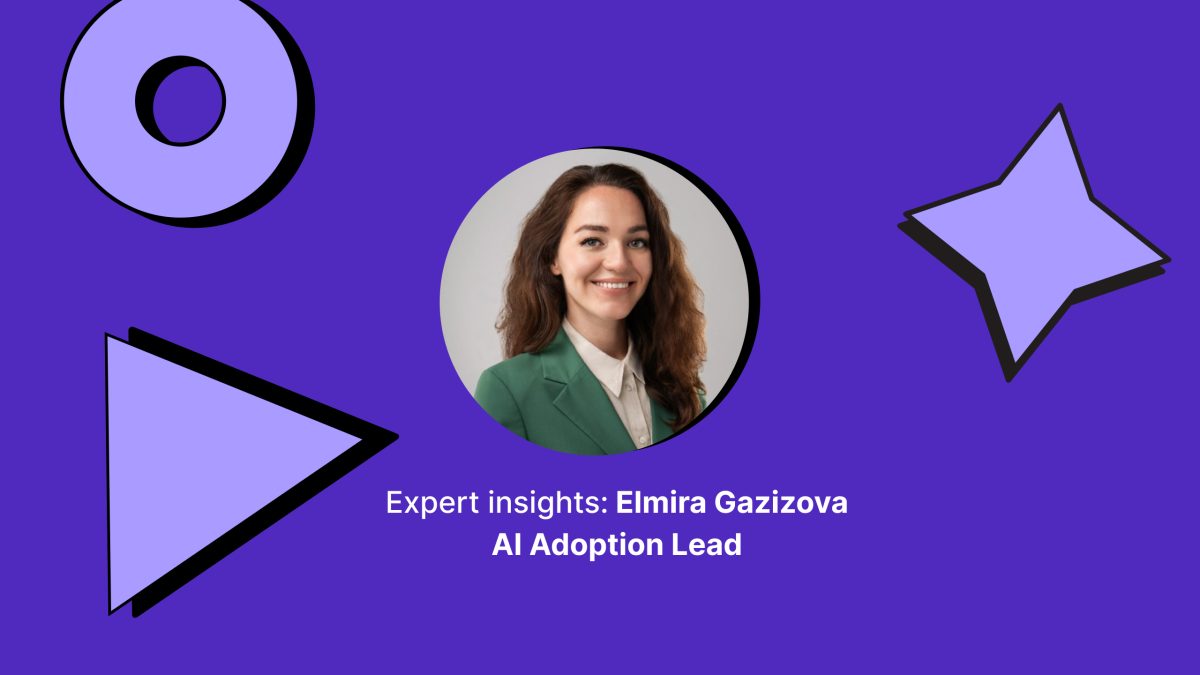
I spoke with Elmira Gazizova, AI Adoption Lead and Marketing Executive at keyIT sa, about how to use AI where it actually adds value. Her take: AI lowers the barrier to information gathering across industries. The real competitive edge today is no longer access to data. It is how fast you can interpret and act on it.
What AI Does Well and Where It Stumbles
AI excels at speed, scale, and pattern recognition. It can scan thousands of posts, surface recurring themes, and flag shifts in performance before a human analyst would notice. It is fantastic for summarizing a competitor’s recent moves into something a team can discuss over coffee.
But AI is weak on context. It does not know your internal constraints, channel priorities, or audience nuance unless you hand-feed those details. Treat AI outputs as directional, not definitive. They are a complement to real customer feedback, not a replacement. Elmira puts it simply: AI-generated qualitative insights should always be treated as hypotheses, not final answers.
Step 1: Define Your Problem and Your Competitors
Before you ask AI anything, decide what problem you are solving. If your question is, “What are competitors doing that we are not?” then your data set needs structure. Classify competitors into three buckets: direct, indirect, and aspirational.
Direct competitors show what winning looks like in your exact category. Indirect competitors reveal where audience attention goes when your product is not the only option. Aspirational brands introduce new formats, storytelling styles, or platform habits worth testing. Keep the list short. Too many competitors create noise. A useful analysis has a set small enough to explain in a meeting and large enough to reveal patterns.
Step 2: Pick the Right AI Assistant for Your Data Reality
General-purpose tools like ChatGPT, Claude, or Perplexity can help you explore a topic, but they depend entirely on what you paste in and how well you frame the prompt. That is a lot of manual setup for each session. The better approach is using tools that let you query an existing competitor dataset without rebuilding inputs every time.
I find Socialinsider’s MCP particularly effective for this. It allows you to ask questions against a structured set of competitor data, cutting down on copying, spreadsheets, and friction. Faster path to insight leads to easier explanations for stakeholders. That matters when the CMO needs a quick answer before a meeting starts.
Step 3: Treat AI Recommendations as Experiments, Not Orders
AI should propose hypotheses, not final answers. The fastest way to validate its output is to turn one recommendation into a small test. Compare the result with past performance. For example, if the AI suggests a stronger hook, a new format, or a different posting pattern, run an A/B test.
Test one variable at a time so you can see whether the change actually moved the metric you care about. This keeps strategy firmly in human hands. AI accelerates the analysis; you still own the decision. Elmira agrees: AI-generated insights are directional. They complement real customer feedback but never replace it.
Common AI use cases in competitive analysis include uncovering positioning gaps, reverse-engineering competitor strategies, and forecasting market opportunities. The technology shines when the task is repetitive, comparative, or pattern-driven. If you only use it for quick summaries, you are leaving most of its potential on the table.
The future of competitive analysis is not about better automation. It is about faster interpretation. Teams that learn to pair clean data with smart questions will stay ahead. Those that treat AI as a magic wand will fall behind.