
A Viral Image and a Political Storm
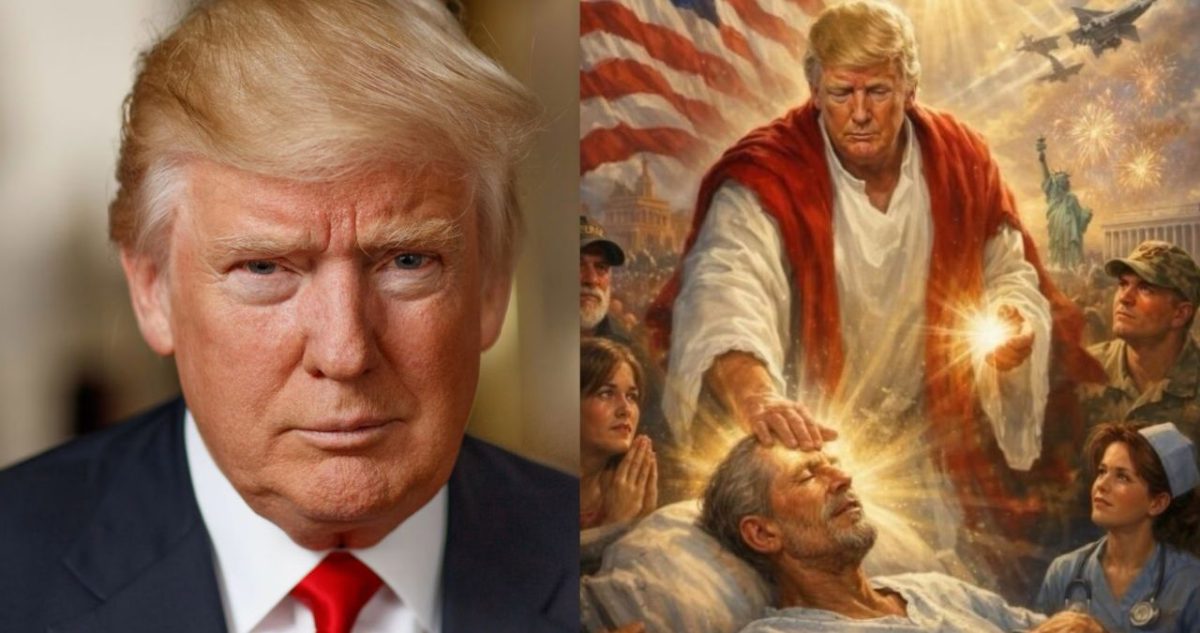
In a move that has ignited global controversy, former President Donald Trump has defended his decision to share an AI-generated image depicting Jesus Christ. The post, which surfaced amid a public dispute with Pope Francis, was captioned with a claim that the image was “supposed to be me as doctor.” This explanation, however, has done little to quell the uproar, instead fueling a complex debate that sits at the intersection of political communication, synthetic media, and deeply held religious beliefs. The incident underscores how rapidly evolving AI tools are being weaponized in the culture wars, creating new ethical and societal flashpoints.
The Genesis of a Digital Controversy
The image in question is a product of modern generative AI, likely created using a model like Midjourney or DALL-E. It portrays a figure with the traditional iconography of Jesus, but with facial features unmistakably resembling those of Donald Trump. Shared to his vast social media following, the visual was immediately met with a polarized response. Supporters viewed it as a symbolic gesture of strength and faith, while critics and religious leaders worldwide decried it as blasphemous and a dangerous conflation of political and spiritual authority. The timing was particularly potent, arriving as Trump and the Pope exchanged public criticisms over issues of migration and morality.
Trump’s subsequent clarification, that the intent was to portray himself in a healing, “doctor” role, added another layer of interpretation. Was this a clumsy metaphor for political healing, or a strategic reframing after the fact? For technologists and media analysts, the intent is almost secondary to the effect. The episode demonstrates the potent ambiguity of AI-generated content, where meaning is fluid and easily contested by its creator and consumers alike.
AI, Authenticity, and the New Political Playbook
This is not an isolated event but part of a troubling trend. The 2024 election cycle has already been flooded with AI-generated deepfakes, from fabricated audio of candidates to manipulated videos. What makes the “AI Jesus” case distinct is its invocation of sacred, universally recognized imagery. It moves beyond misleading claims about a rival’s gaffe and into the realm of identity and sacrilege. The tools to create such convincing forgeries are now democratized, sitting on every laptop and smartphone. How does a public already struggling with media literacy contend with synthetic content that targets not just their politics, but their core values?
The technical process behind such an image is fascinatingly simple, which is precisely what makes it so alarming. A user inputs a detailed prompt, something like “photorealistic portrait of Jesus Christ with the face of Donald Trump, divine light, detailed.” Within seconds, the AI model, trained on millions of images and their associated text captions, synthesizes a novel creation that never existed. It stitches together learned patterns for “Jesus” (a beard, flowing hair, a serene expression) with the distinct facial geometry of Trump. The result is a seamless, and for many, a profoundly unsettling, hybrid.
Religious Symbolism as a Digital Battleground
The backlash from religious communities has been swift and severe. For billions of Christians, the image of Jesus is not merely a historical representation; it is a sacred symbol central to their faith. Replacing that visage with that of a divisive political figure is seen by many as a profound act of disrespect, a digital-age violation of the commandment against graven images. The Vatican has remained officially silent on this specific post, but Catholic theologians and leaders of other denominations have expressed deep concern. They argue it represents the commodification and politicization of the divine, reducing a cornerstone of faith to a viral meme in a political spat.
This raises a critical question for platform moderators and policymakers: where is the line between political satire, protected speech, and hateful or harassing content when AI is involved? Current content moderation systems are notoriously poor at understanding context and nuance, often failing even with simpler human-created media. An AI-generated image that is offensive to one group may be celebrated as free expression by another. The platforms hosting this content now find themselves in the unwelcome role of arbiters of theological and political decorum, a position for which they are spectacularly ill-equipped.
The Inevitable Arms Race of Synthetic Media
Looking ahead, this incident is a mere preview. As generative AI models grow more sophisticated, accessible, and capable of producing not just static images but convincing video and audio, such episodes will become more frequent and more damaging. The defense of “it was supposed to be me as a doctor” highlights a potential future strategy: plausible deniability through creative reinterpretation. When confronted with a damaging or offensive deepfake, a public figure can simply claim it was misunderstood, a metaphor, or an AI experiment gone awry.
This creates a fog of war over reality itself, where nothing can be trusted without forensic digital verification. The response is fueling a parallel industry in AI detection and provenance tools, like cryptographic watermarking and content credentialing. Major coalitions, such as the Content Authenticity Initiative, are pushing for standards that would embed tamper-evident metadata into media files, signaling how and by whom they were created. Yet, for every defensive technology, there will be a dozen ways to circumvent it, especially for bad actors operating outside of ethical guidelines.
The ultimate impact may be a further erosion of our shared epistemic foundation. If we cannot agree on what is real, or even on the basic meaning of what we see, constructive political discourse becomes impossible. The Trump AI Jesus saga is a canary in the coal mine, a vivid, bizarre signal that the future of public communication will be defined by a constant struggle between synthetic creation and the human hunger for truth. The next viral image might not just start a feud; it might ignite a deeper crisis of faith, in both our institutions and our own eyes.