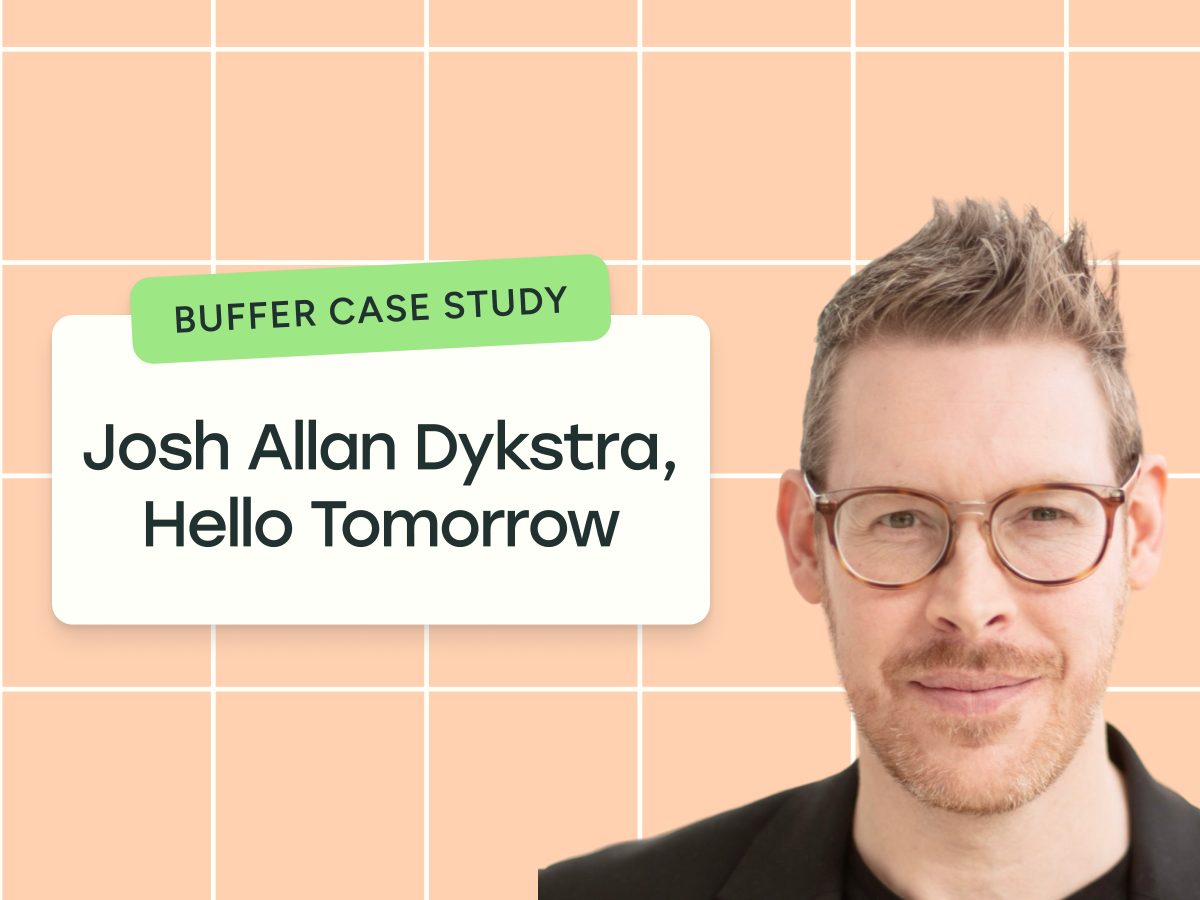

Josh Allan Dykstra has spent two decades solving a problem most of us just complain about: making work not suck. As a keynote speaker, author, entrepreneur, and tech founder, he has tackled this mission for clients including Microsoft, Amazon, CHANEL, and the State of Colorado. His forthcoming book, Work Will Kill Us All: An Optimist’s Guide To The Future, promises to distill those twenty years into a manifesto for change.
But here is the paradox. Dykstra maintains nearly 48,000 followers across Instagram, X, LinkedIn, and TikTok, with 20,000 on Instagram alone. He publishes content every single workday. And yet, he touches social media exactly one day a month. How does he pull off this seemingly impossible balancing act without losing his mind?
The Batch-and-Buffer Philosophy
The answer lies in a process that would make most productivity gurus weep with envy. Dykstra takes one day each month to batch an entire month’s worth of content into Buffer, a social media management tool. Every weekday, something goes out. Sometimes multiple things. But the human behind the curtain is nowhere to be found.
This approach isn’t just about efficiency. It’s about protecting the deep work that actually matters: writing books, hosting his Substack podcast Hello Tomorrow, and speaking on stages around the world. Social media becomes a background process, not a daily treadmill.
What Was Missing from the Stack
For a long time, everything Dykstra published flowed through Buffer with one stubborn exception: Substack. His podcast lived there, and his written work found a home there, but it sat outside the automated ecosystem. That gap has finally closed, and the timing could not be better.
Dykstra recently began crossposting his image and video content from Instagram and TikTok over to Substack Notes. It started as an experiment, a simple question: does the audience he built on Substack want the same things his Instagram and TikTok followers do? The answer will directly shape how he promotes his book this fall.
Twenty Years of Words, One Year of Video
Dykstra has been publishing words online since 2005, back when blogging was still a rebellious act. Video, however, is a much newer habit. “While I’ve been posting words online for a very long time, I’ve never really posted video until this year,” he admits. “So that’s been a sharp learning curve.”
He picked up short-form video around the same time he launched his podcast and started drafting his second book. Juggling all three with any semblance of consistency has been tricky, to put it mildly. Even small reductions in friction make a measurable difference when your calendar looks like a game of Tetris.
The Little Features That Save Big Time
One such feature is Buffer’s internal image crop tool. It sounds trivial, but Dykstra is genuinely grateful for it. “I’m always very grateful that I don’t have to leave the tool to make a small dimension tweak for Instagram,” he says. Those micro-savings add up when you are managing four platforms plus a newsletter.
The Numbers Behind the Strategy
The results speak for themselves. Dykstra’s Instagram following grew from 500 to 20,000 in just six months. That kind of growth might tempt some creators to credit their tool of choice entirely. Dykstra stays grounded. “The time saved by using Buffer is the main benefit for me,” he says, not the algorithm magic.
That reclaimed time goes directly into finishing his book and into answering a more interesting question: does the Substack Notes audience actually want video? His answer will influence everything from content format to launch strategy. And his advice to other creators is refreshingly direct: “What are you waiting for?! If you’re cross-posting at all, this will save you TONS of time.”
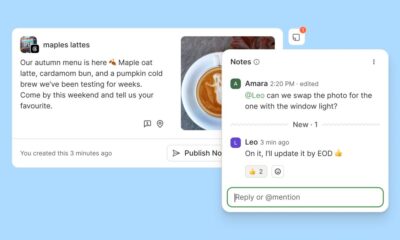
Buffer recently added Substack Notes support, letting creators schedule notes alongside their other channels and crosspost them to X, LinkedIn, Threads, and Bluesky. The feature also tracks which platforms convert free subscribers into paid ones, a metric that matters more than vanity likes ever will.
What This Means for Creators Who Value Sanity
Dykstra’s story is not about hacks or growth tactics. It is about a deliberate choice to treat social media as infrastructure rather than a lifestyle. He shows up consistently, but he does not live there. That distinction is becoming a competitive advantage as more creators burn out chasing the algorithm’s every whim.
The real insight is simpler than it sounds. Batch your content, trust your tools, and protect your deep work. Whether you are writing a book, building a product, or just trying to survive the content economy, the principle holds.
As platforms continue to fragment and audiences splinter across a dozen feeds, the creators who thrive will not be the ones who post the most. They will be the ones who build systems that let them step away. Dykstra figured that out before most of us even opened our first scheduling app.