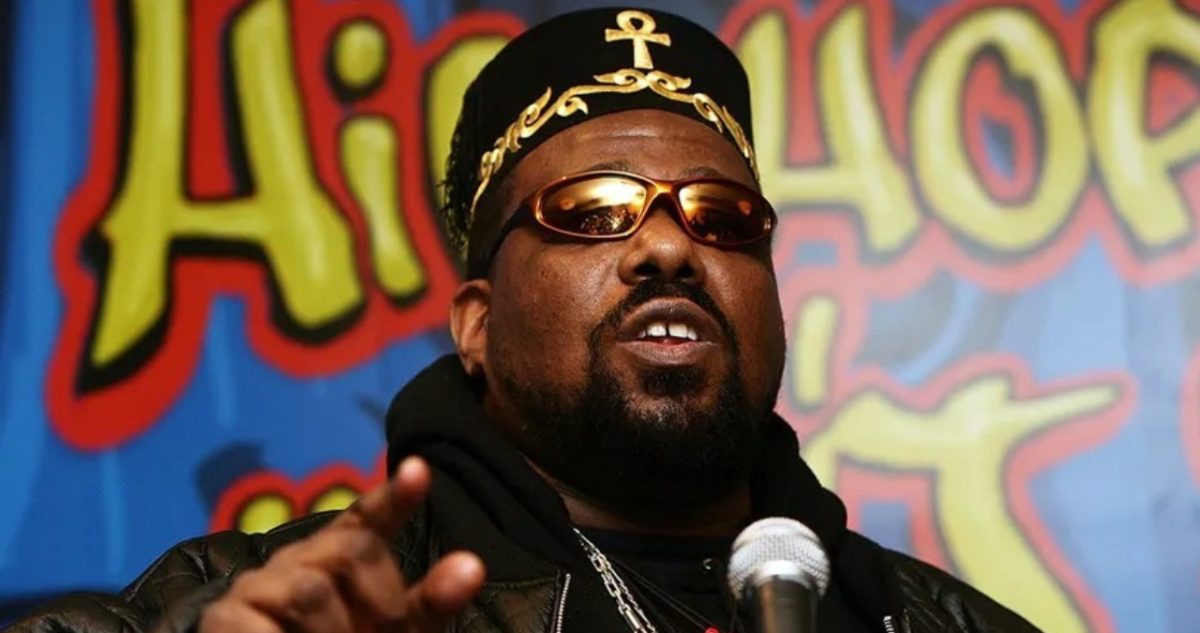

The news rippled through digital communities with a profound sense of loss, a notification no one wanted to see. Afrika Bambaataa, the foundational architect of hip-hop culture, has passed away at 67. While the specific cause of death has not been publicly detailed by family representatives at this time, the focus rightly shifts from the end to the extraordinary beginning he engineered. For those of us who analyze the intersection of culture and technology, his passing isn’t just a music industry moment; it’s a prompt to examine the very blueprints of our digital social networks, which he prefigured in analog form.
From Street Corner to Global Network
Long before Mark Zuckerberg wrote a line of code for TheFacebook, Afrika Bambaataa was mastering a far more complex social graph. In the devastated Bronx of the 1970s, he performed perhaps the most crucial hack in modern cultural history: he transformed street gang energy into creative collective force. His Universal Zulu Nation wasn’t just a crew; it was a protocol. It established core tenets peace, unity, love, and having fun that functioned like an open-source API for a new cultural movement.
Think of him as a visionary system administrator for an entire generation. He didn’t merely play records; he curated data sets of sound, pulling from Kraftwerk, rock, and global funk to build a new sonic library. This crate-digging ethos is the direct ancestor of the algorithmic playlist and the modern producer’s sample-based workflow. Where a developer might stack frameworks, Bambaataa stacked breakbeats and synthesizer lines, compiling a new executable format for dance floors worldwide.
The Master Sample and the Birth of a Platform
His 1982 masterpiece with the Soulsonic Force, “Planet Rock,” serves as the ultimate case study. It wasn’t just a song; it was a cultural software update. By explicitly sampling the electronic rhythms of Kraftwerk’s “Trans-Europe Express,” Bambaataa demonstrated that technology itself could be the instrument. He repurposed existing code, in this case, a cold, European electronic track, and injected it with the warmth and rhythm of the Bronx, creating an entirely new genre: electro-funk.
This act of creative sampling is the philosophical bedrock of remix culture, open-source development, and even meme creation. Every developer who forks a repository on GitHub or a creator who remixes a trend on TikTok is operating within a framework Bambaataa helped legitimize. He proved that innovation isn’t always about building from absolute zero; often, it’s about the ingenious recombination of existing parts into something revolutionary.
Legacy in the Layer Cake of Modern Tech Culture
So, why should this matter to a reader of a tech blog? Look beyond the turntables. Bambaataa’s real innovation was community-driven platform building. The Zulu Nation provided the governance model (the tenets), the content pillars (the four elements of hip-hop: DJing, MCing, breaking, and graffiti), and the incentive structure (respect and artistic prowess over pure capital). Sound familiar? It’s the foundational logic of every successful online community, from early forum mod culture to the intricate social economies of platforms like Discord or Roblox.
His visionary naming also speaks to a tech sensibility. “Afrika Bambaataa” was taken from a 19th-century Zulu chief and a seminal documentary about Africa, signaling a connection to heritage and a global perspective. He was crafting a personal brand and a world-building narrative long before it was a standard startup practice. He understood that to scale a culture, you needed a compelling mythos, a strong namespace.
Navigating the Complexities of a Cultural Codebase
Any honest retrospection must acknowledge that Bambaataa’s later years were clouded by serious allegations, which created a complex and painful rift within the very community he built. This presents a challenging parallel to our modern tech landscape: how do we evaluate the foundational work of a pioneering architect against later controversies? It’s a question the industry grapples with regarding certain founding figures. The legacy becomes a forked repository; one branch holds the transformative early work, another the difficult personal history, and the community must decide how, or if, to merge that understanding.
This complexity doesn’t erase his foundational code. It does, however, remind us that the systems we build, whether cultural or digital, are ultimately maintained by people. And the health of any long-term project depends on sustainable, ethical governance from the start. It’s a sobering layer to the legacy, a mandatory patch note in the history of the system he designed.
The Eternal Breakbeat: Looking Forward
The beat, as they say, goes on. But it does so on a timeline Bambaataa helped define. The decentralized, DIY ethos of hip-hop’s birth is mirrored in today’s creator economy and decentralized web3 experiments. The sample is now a software snippet, the battle is a hackathon, and the crew is a distributed DAO. His true cause of death may be a private matter, but the cause he lived for the propagation of a unifying, creative, and resilient digital-analog culture is more alive than ever.
His passing invites us to audit our own cultural stack. What are the foundational frameworks of your digital community? What are its core tenets? By examining the original blueprints drawn up in the Bronx, we can better understand the architecture of the viral trends and global platforms that define our age. The next time a new social app or musical AI goes viral, listen closely. You might just hear the echo of a breakbeat spun by a visionary who saw the network before the network existed.