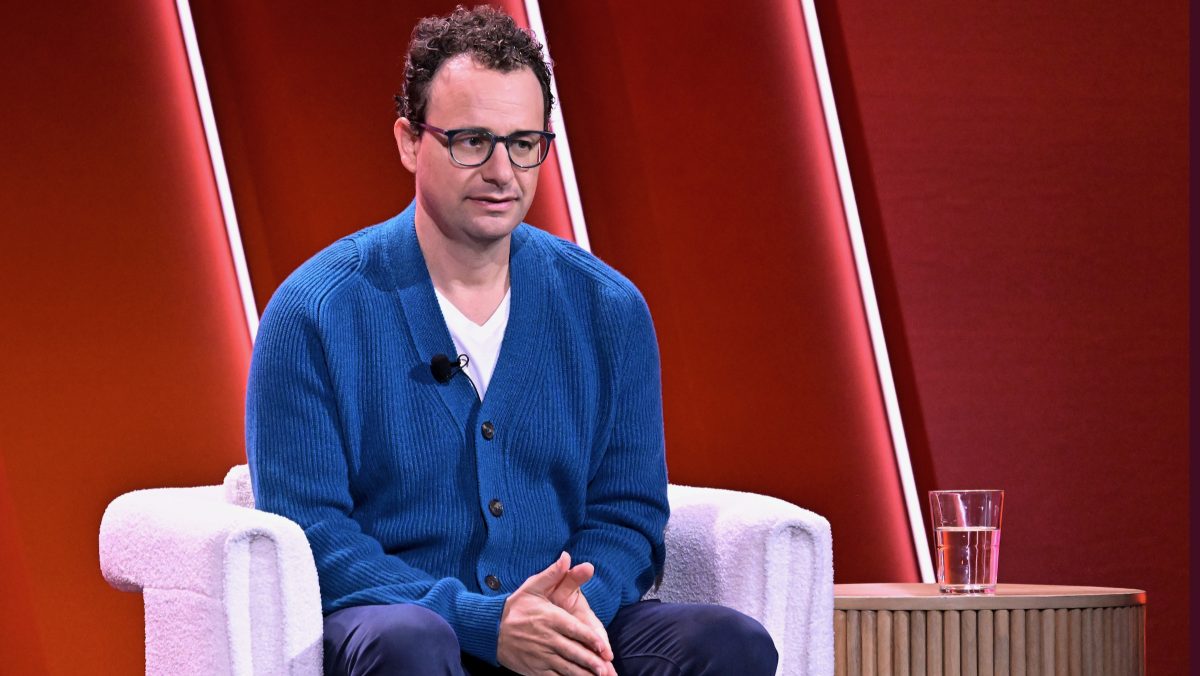

Mustafa Suleyman, the CEO of Microsoft AI, has thrown a rhetorical grenade into the middle of the artificial intelligence debate this week. His target? Anthropic, the AI safety company founded by former OpenAI researchers, which he accuses of chasing something far more problematic than mere capability: machine consciousness. In a pointed critique, Suleyman suggested that some researchers are taking a Frankenstein-like approach to building intelligent systems, and that this obsession with creating sentient machines is both misguided and dangerous.
The timing is not accidental. The AI world has spent the past several days wrestling with a dizzying array of existential questions. Will AI destroy humanity? Is the technology advancing faster than we can control? How should governments regulate it? And, in a bizarre twist that could only happen in tech, is AI doomerism somehow linked to a rationalist sex cult? Yes, really. Against that backdrop, Suleyman’s decision to call out Anthropic feels less like a random jab and more like a deliberate attempt to refocus the conversation.
What Exactly Did Suleyman Say About Anthropic?
Suleyman did not mince words. He argued that Anthropic and similar labs are effectively treating AI development as a quest to replicate human consciousness, a goal he considers both scientifically dubious and ethically fraught. Instead of chasing some ghost in the machine, he suggests the industry should focus on building useful, controllable, and transparent systems. The Microsoft AI chief has long been a proponent of what he calls “containment” and “alignment,” but his latest comments add a sharper edge: stop trying to play God, start trying to build good tools.
Anthropic, for its part, has built its brand around safety and interpretability. The company’s flagship model, Claude, is often praised for its careful, nuanced responses. But Suleyman’s critique hints at a deeper philosophical rift. Is Anthropic actually trying to create conscious AI, or is it merely exploring the boundaries of cognition in a way that unnerves competitors? The answer depends on whom you ask, and the ambiguity itself is telling.
The Frankenstein Problem: Why Consciousness Chasing Is a Trap
Mary Shelley’s Frankenstein is not really about a monster. It is about a scientist who creates life without fully understanding the consequences. Suleyman’s use of that analogy is apt. When AI researchers talk about “emergent abilities,” “self-awareness,” or “phenomenal experience,” they are borrowing language from neuroscience and philosophy without necessarily grasping the weight of those terms. The result is a kind of category error: treating a statistical model as if it were a mind.
This is not just an academic quibble. If companies genuinely believe they are building conscious machines, they may justify reckless scaling, opaque decision-making, or even the eventual granting of rights to software. That path leads to regulatory chaos and public backlash. Worse, it distracts from the real, immediate harms: bias, misinformation, labor displacement, and concentration of power. You do not need a sentient AI to cause a catastrophe. A dumb one with a lot of compute will do just fine.
Anthropic’s Response and the Broader Industry Divide
Anthropic has not officially responded to Suleyman’s remarks, but insiders suggest the company views his criticism as a mischaracterization. Anthropic’s research into “constitutional AI” and “interpretability” is about making models safer, not about creating digital souls. Still, the perception matters. In a field where hype often outpaces substance, being seen as the consciousness-chasing lab is a reputational risk. It invites both regulatory scrutiny and ridicule.
The divide between Microsoft and Anthropic reflects a larger split in the AI community. On one side are the “scalers,” who believe that bigger models will eventually produce general intelligence, perhaps even consciousness. On the other are the “engineers,” who see AI as a powerful but ultimately mundane technology, like electricity or the internet. Suleyman clearly falls into the second camp. He wants AI that works, not AI that wonders.
Why This Debate Matters for Developers and Tech Leaders
For developers and CTOs, the consciousness debate might seem like philosophical navel-gazing. It is not. The way companies frame AI affects everything from hiring to product roadmaps to liability. If your CEO thinks the model is conscious, you might end up building features that assume moral agency. If your CEO thinks it is a tool, you build guardrails, audits, and kill switches. The difference is not trivial. It is the difference between a product and a religion.
Moreover, the regulatory landscape is shifting rapidly. The EU AI Act, various US state bills, and international treaties all hinge on how we define AI. If consciousness becomes part of the definition, compliance becomes a nightmare. Suleyman’s intervention is a warning: do not let anthropomorphism drive policy. Let utility and accountability drive it instead.
The Sex Cult Question and Other Distractions
And then there is the strangest subplot of the week. A viral essay linked the AI doomer movement to a rationalist sex cult, a claim that sounds like a bad sci-fi novel but has captured the internet’s imagination. While the details are murky, the episode illustrates how quickly AI discourse can spiral into absurdity. Suleyman, to his credit, did not engage with that particular circus. He kept his focus on the technical and ethical core: stop chasing ghosts, start building responsibly.
That discipline is rare in today’s AI conversation, where every week brings a new existential panic or messianic promise. The industry needs more voices like his, willing to say that the emperor has no clothes, or at least no consciousness. The real challenge is not creating a mind. It is creating a machine that does not break the world.
What Comes Next: A Call for Pragmatic AI Development
Suleyman’s critique of Anthropic will likely fade from the headlines by next week, replaced by some new drama. But the underlying question will remain: what are we actually building? If the answer is “a conscious being,” we are in trouble. If the answer is “a tool that amplifies human capability,” we have a fighting chance. The choice is ours, and it starts with the language we use and the leaders we listen to.
As AI models grow more capable, the temptation to project minds onto them will only intensify. Suleyman’s warning is a timely antidote: stay grounded, stay skeptical, and never confuse a chatbot with a soul. The future of AI depends not on how human we make it, but on how human we remain while using it.