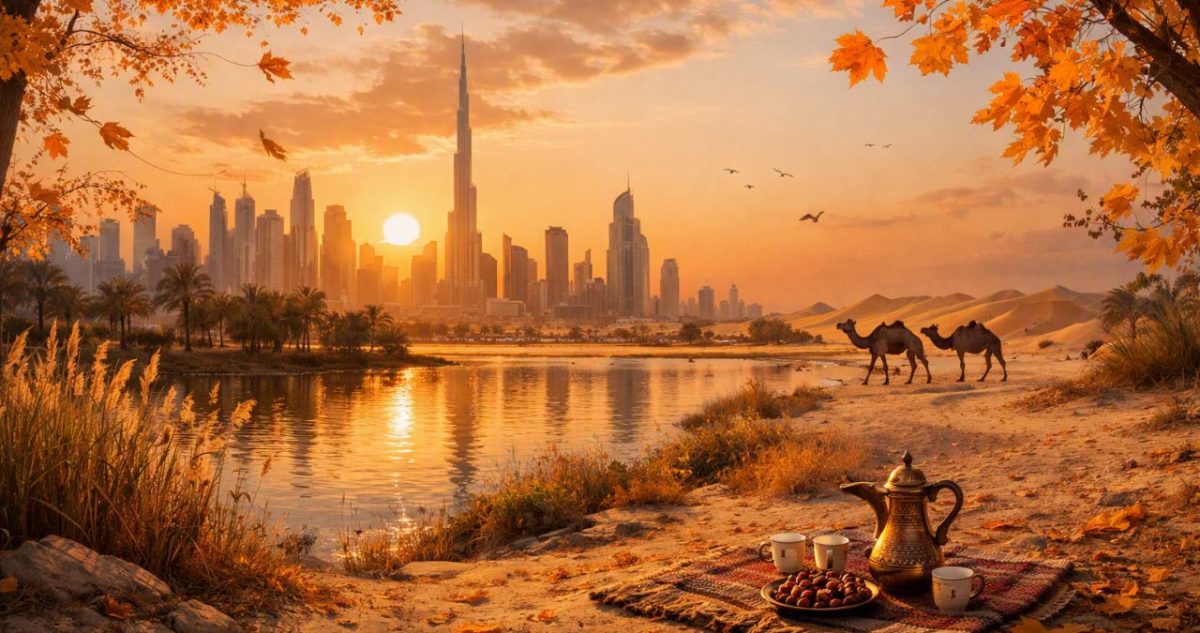

The relentless furnace that is the UAE summer is finally loosening its grip. Temperatures are beginning to dip, albeit gradually, and there is a palpable sense of relief in the air. For residents who have spent months hopping between air-conditioned spaces, this seasonal shift feels like a long-awaited software update for the soul.
But don’t pack away your fans just yet. The transition is subtle, and humidity still lingers like a stubborn background process. What matters is the trajectory: we are moving toward cooler nights, a higher chance of rain, and the return of outdoor life across the Emirates.
From Scorching Heat to Subtle Relief: The Mechanics of the Shift
Summer in the UAE is not just hot; it is a full-scale atmospheric assault. Temperatures routinely soar past 45°C, and the Persian Gulf acts like a giant heat reservoir, pumping moisture into the air. That combination of heat and humidity creates a heat index that can feel like 60°C or more. It is the kind of weather that makes you question every life choice that led you to step outside.
Now, as the sun’s angle shifts and the days grow marginally shorter, the intensity of that solar radiation begins to wane. The land cools faster than the sea, and the pressure gradients start to reorganize. This is not an overnight change, of course. Think of it as a gradual rollout, not a sudden patch. The nights are the first to feel different, offering a hint of breeze that does not feel like a hairdryer.
Meteorologically speaking, the UAE is entering a transitional period. The Indian monsoon low is weakening, and the subtropical high is retreating. This opens the door for cooler, drier air from the north and, occasionally, moisture-laden systems from the south. That is where the rain chances come in.
Why Rain in the UAE Is Both a Blessing and a Logistical Puzzle
Rain in the Emirates is a rare and precious event. On average, the country receives less than 100 millimeters of rainfall per year, most of it between November and March. So when the forecast mentions a chance of showers, it is not just a weather update; it is a conversation starter.
For tech and developer readers, think of rain in the UAE like a sudden traffic spike on a production server. It is welcome in theory, but the infrastructure is not always built to handle it. Drainage systems can struggle, roads become slick with oil and dust, and drivers who rarely see wet asphalt tend to react unpredictably. That is why even a light drizzle can cause delays and cautionary tales.
Still, the benefits are undeniable. Rain cleans the air, nourishes the few green spaces that exist, and provides a psychological boost. There is something deeply satisfying about the smell of rain on dry earth, a phenomenon known as petrichor. In a region where water is scarce, every drop feels like a small victory.
Cooler Nights and the Rebirth of Outdoor Culture
One of the most immediate changes is the return of outdoor life. During summer, the UAE’s social and recreational scene retreats indoors. Malls become crowded, indoor cafes thrive, and outdoor gyms sit empty. But as the nights cool, the equation flips.
Expect to see more people walking along the Corniche in Abu Dhabi, strolling through Dubai’s Marina, or hiking in the Hajar Mountains. Restaurants and cafes will start opening their terraces, and outdoor markets will pop up like mushrooms after rain. This is not just a matter of comfort; it is a cultural rhythm that has defined the region for centuries.
For developers and remote workers, this shift also means more opportunities to work outside. A laptop on a balcony, a cup of karak, and a gentle breeze: that is the new productivity stack. Just remember that the sun is still strong during the day, so sunscreen and hydration remain non-negotiable.
What to Expect in the Coming Weeks
The forecast models suggest a gradual cooling trend, with nighttime temperatures dropping into the low 20s in some inland areas by late October. Coastal regions will remain warmer due to the moderating effect of the sea, but even there, the difference will be noticeable. Humidity will still be a factor, especially in the mornings, but it will become less oppressive.
As for rain, the probability increases as we move deeper into autumn. The UAE’s cloud seeding program, which uses aircraft to inject salt particles into clouds, will also be active. This is a fascinating blend of technology and meteorology, essentially giving nature a nudge to squeeze out a few more drops. Whether you see it as geoengineering or just clever water management, it is a reminder that the UAE is not content to wait for the weather to cooperate.
In the meantime, keep an eye on the sky and your weather app. The transition from summer to autumn in the UAE is not a dramatic fall foliage spectacle; it is a subtle recalibration. But for those who have endured the heat, it is a welcome change nonetheless.
Looking ahead, the coming months will bring a gradual return to outdoor life, cooler evenings, and the occasional rain shower. It is a reminder that even in a desert, seasons have their own way of making themselves known. So dust off your light jacket, plan a picnic, and enjoy the shift. The worst of the heat is behind us, at least until next year.