
Smartphone Photography Reaches a New Frontier
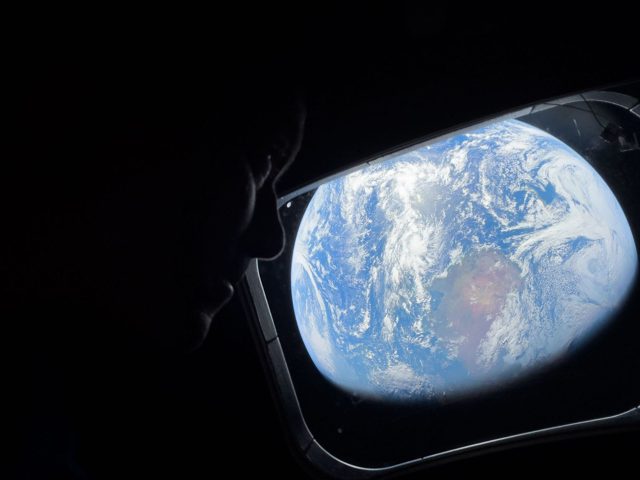
Forget low-light photography on Earth. The latest test for camera technology unfolded over 230,000 miles away, in the profound darkness between our planet and the Moon. NASA has just unveiled a breathtaking series of images captured not by a multi-million dollar satellite, but by an iPhone 17 Pro Max aboard the Orion spacecraft during the uncrewed Artemis I mission. This isn’t a marketing stunt; it’s a serious evaluation of commercial technology in the most extreme environment imaginable.
More Than Just Pretty Pictures
While the photos themselves are visually spectacular, showing the curvature of Earth against the infinite black of space and the intricate details of the Moon’s far side, their true value lies in the data. NASA engineers are meticulously analyzing these images to assess sensor performance, lens flare control, and data compression under intense cosmic radiation and wild temperature swings. Could consumer-grade hardware reliably document future missions or even serve as a backup engineering camera? That’s the core question behind this experiment.
The choice of device is particularly telling. The iPhone 17 Pro Max, with its advanced computational photography stack and robust titanium chassis, represents the pinnacle of mass-produced consumer tech. By testing it on Artemis I, NASA is conducting a high-stakes stress test with implications for both space exploration and consumer electronics back home. What does it mean for a smartphone camera to be “space-grade”?
The Technical Challenges of Shooting in a Vacuum
Taking a photo in space isn’t as simple as pointing and shooting. The environment inside the Orion capsule, while pressurized, is still subject to conditions that would make a terrestrial photographer shudder. Extreme thermal variations can cause lenses to fog or components to contract and expand. More insidiously, cosmic radiation can bombard the image sensor, creating visual noise or “hot pixels” that don’t exist in the scene.
Apple, in collaboration with NASA, likely implemented specialized firmware for the mission. This software would have prioritized data integrity and sensor calibration over the usual computational tricks like Deep Fusion or Night mode. The goal was to capture a scientifically useful raw image, not just a social-media-ready JPEG. The stunning results suggest they succeeded, showing remarkable clarity and color accuracy despite the hurdles.
A Legacy of Consumer Tech in Space
This isn’t the first time everyday gadgets have gone orbital. Astronauts have used iPads for years as digital manuals, and GoPro cameras are staples for recording spacewalks. The difference with the Artemis II iPhone imagery is the deliberate, systematic push to integrate a primary smartphone into deep-space mission documentation. It continues a trend of commoditization, where incredibly capable, off-the-shelf technology can augment or even replace bespoke, astronomically expensive aerospace hardware.
Think of it like the difference between a hand-built Formula 1 car and a modified production sports car. Both are fast, but one offers a radically different approach to performance and accessibility. The images prove the “production sports car” can not only survive the track but also deliver professional-grade results.
Context and the Road to Artemis II
These images were captured during the Artemis I mission, an uncrewed test flight that looped around the Moon and returned safely. The spacecraft, as noted in mission timelines, is scheduled for its return to Earth on April 10. The success of this test paves the way for Artemis II, the program’s first crewed mission, which will follow a similar trajectory with astronauts on board.
It’s highly plausible that the crew of Artemis II will have even more advanced consumer technology at their fingertips for personal use and operational support. The lessons learned from this iPhone experiment directly inform what tools will be in their hands. Will future astronauts document their historic journey with devices they also use to video call their families? The line between specialized mission gear and personal electronics is blurring fast.
Implications for the Future of Exploration
The implications stretch far beyond lunar missions. As NASA sets its sights on Mars, every gram of payload matters. Sending a device that functions as a camera, a scientific sensor, a communication terminal, and a personal computer is a compelling proposition. This test is a step toward that multifunctional future, reducing mass, complexity, and cost. It democratizes the tools of exploration.
For the rest of us, it adds a fascinating new dimension to smartphone marketing. When a company claims its phone has a “revolutionary camera system,” we can now ask: revolutionary enough for deep space? The benchmark for durability and performance has been irrevocably raised. The next time you see a smartphone ad touting its low-light capabilities, you might just picture it silhouetted against the Moon.
Looking ahead, the collaboration between consumer tech giants and space agencies will only deepen. The data from this iPhone experiment will filter down, influencing the design of sensors and processors in future devices. The final frontier is becoming a proving ground for the technology in your pocket, and the photos are just the beginning of a much larger story.