Kevin Indig doesn’t just write a newsletter. He builds a distribution machine around it, one that turns a single weekly memo into a steady drumbeat of posts across Substack Notes and beyond.
His publication, Growth Memo, reaches more than 29,000 founders, in-house growth leads, and marketing executives every week. That’s a substantial audience by any measure. But the real story isn’t the subscriber count. It’s the system Kevin built to make sure his ideas don’t vanish after a single day in the spotlight.
The Problem With Publishing and Praying
Most writers know the drill. You spend days researching, drafting, and polishing a piece. It goes out. It gets a brief window of attention. Then the algorithm moves on, and your work sinks into the archives. Kevin saw this cycle and decided to break it.
“Publishing is only half the job,” he says. “You also need a repeatable way to distribute your work.” That mindset shift is what separates creators who build durable audiences from those who burn out chasing one-off viral moments.
Kevin’s approach is deceptively simple: stop treating a Memo as a single post. Treat it as a week’s worth of content. A chart here, a surprising finding there, a question worth discussing. “A single Memo gives us several things to share,” he explains. This is the same logic behind repurposing long-form content, just applied with discipline to a newsletter workflow.
Testing Ideas Before Going All In
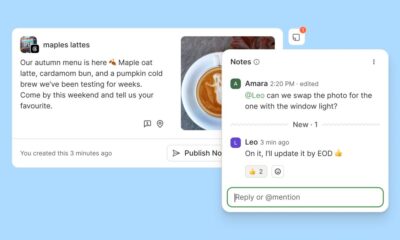
Before committing to a full article, Kevin uses Substack Notes as a testing ground. He posts short takes, charts, videos, and teasers for memos that haven’t gone out yet. It’s a low-stakes way to gauge interest and refine his thinking.
The math here is compelling. A fully researched memo can consume an entire week of his time. A Note takes minutes. Why not invest a few minutes to see if an idea has legs before diving into the deep end? That’s not laziness. It’s leverage.
Ideas come from his original research, client conversations, and patterns he spots in data. He spent a decade as an operator and leader at Shopify, G2, and Atlassian. Now he advises companies like Meta, Airbnb, and Reddit on growth strategy. In his own words, he swims in data all day. That constant immersion gives him a steady supply of raw material to test.
When a Note performs well, it often earns a full newsletter. The audience essentially votes with their attention, and Kevin listens.
Buffer as the Distribution Backbone
Kevin and his team prepare posts around each newsletter, then use Buffer to schedule them. Scheduling isn’t a nice-to-have for him. It’s essential. Some weeks he’s traveling. Other days are booked solid with client calls. He can’t be online for every post, and he shouldn’t have to be.
With Substack Notes now available as a channel in Buffer, Kevin can batch-prep his ideas and let the queue do the work. “Buffer makes sure every Memo gets distributed without requiring me to be online for every post,” he says. “If I had to put a number on it, I’d say Buffer saves me 2 to 3 hours a week.”
That’s not a trivial amount of time. Over a year, it adds up to more than a hundred hours. Hours he can spend researching, writing, or actually talking to clients instead of manually copying and pasting links.
Where AI Meets the Content Queue
Kevin’s favorite Buffer feature might surprise you. It’s the Model Context Protocol integration, which lets AI tools connect directly to a Buffer account. He points Codex, OpenAI’s coding assistant, at his own post history to see which posts landed and pull ideas for what to write next.
“I love the MCP,” he says. “Being able to connect Codex to Buffer, understand which posts perform well, and get inspiration for what to post next is unbeatable.”
Think about what’s happening here. A human writer is using an AI coding assistant as a research analyst for content strategy. It’s a clever repurposing of tools designed for developers. The lines between technical workflows and creative workflows keep blurring, and Kevin is leaning into that.
Advice That Works at Any Scale
For writers still wondering whether they need a scheduling tool at all, Kevin keeps it simple. Start where your readers already are. Build a routine you can actually keep. Check what’s working so you can repeat it or move on.
That advice holds whether you’re just starting on Substack or you’re 30,000 subscribers deep. The tactics scale, but the principles don’t change. Show up consistently. Pay attention to feedback. Don’t let good work disappear into the void.
Kevin’s version of this routine happens to run on a scheduling queue and a coding assistant. But the routine itself is the engine. Tools just remove friction.
What This Means for the Rest of Us
The broader lesson here isn’t about Buffer or Substack Notes specifically. It’s about treating distribution as a first-class part of the creative process, not an afterthought. Most writers spend 90 percent of their energy on creation and 10 percent on getting the work seen. Kevin flips that ratio in a way that doesn’t sacrifice quality.
As more creators adopt AI-assisted workflows and multi-channel publishing, the ones who thrive will be those who build systems, not just write posts. The content itself still matters most, obviously. But a great piece that nobody sees might as well not exist.
The next wave of growth won’t come from writing more. It will come from making every word you write work harder, longer, and across more surfaces. Kevin Indig is already there. The question is whether the rest of us will catch up.