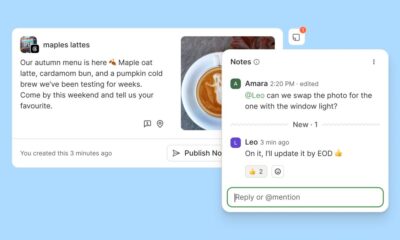

Substack writers have been asking for this one for a while. More than 1,100 upvotes piled up on the feature request, and now Buffer has officially flipped the switch on its Substack Notes integration. The move lands at a moment when Substack’s ecosystem is growing at a pace that’s hard to ignore, with over 50 million active subscriptions across the platform and paid subscriptions more than doubling in just two years.
For creators who have been juggling Substack alongside X, LinkedIn, Threads, and Bluesky, this is more than a convenience. It’s a structural shift in how they plan, publish, and measure their short-form content.
Why Substack Notes Matter for Growth
Notes launched in 2023 as Substack’s answer to short-form social posting. Think of it as a hybrid between a tweet and a newsletter teaser, designed to help writers surface their work to new readers inside the Substack network. The format rewards consistency, which is exactly where most solo creators struggle. Posting every day sounds noble until you’re staring at a blank text box at 11 p.m.
Buffer’s integration addresses that friction directly. Once your Substack account is connected, you can schedule Notes in advance, slot them into optimal time windows, and treat them like any other social channel in your publishing stack.
What You Can Actually Do With the Integration
The scheduling piece is the headline feature, but the crossposting angle might be the real workhorse. You can write a Note once and push it out to X, LinkedIn, Threads, Bluesky, and other connected platforms without rewriting or reformatting. That alone eliminates a ton of copy-paste gymnastics.
There’s also a clever archival play here. If you connect your Substack as a feed in Buffer, your published posts become reusable assets you can reshare across social channels. Evergreen content gets a second life, and your older essays keep pulling in new subscribers months after publication.
Analytics round out the package. Buffer shows which Notes actually convert readers into free and paid subscribers, along with impressions, engagement metrics, and other signals. Knowing what drives subscription growth is genuinely rare in the newsletter world, where most writers operate on gut feeling.
Team Collaboration and AI Tooling
For media teams running multiple Substack accounts, Buffer now supports collaborative drafting and scheduling. No more passing drafts around in Slack threads or email chains that get buried by Tuesday afternoon. And for the AI-curious crowd, Substack Notes support works with Buffer’s MCP, meaning you can analyze, plan, and schedule Notes through your favorite AI tools.
How Real Creators Are Already Using It
Kevin Indig, who writes Growth Memo for over 29,000 founders and marketing leaders, estimates Buffer saves him two to three hours per week on distribution alone. He uses Notes to test ideas before committing them to full articles, a workflow that turns audience feedback into an editorial compass.
Daniel Hieber, author of Linguistic Discovery, treats Buffer as his content distribution center. Each newsletter issue gets broken into microposts across Substack Notes, Threads, and X, scheduled over the following weeks, all pointing back to the full issue. That kind of systematic repurposing used to require a dedicated social media manager. Now it’s a solo operation.
Josh Allan Dykstra, host of the Hello Tomorrow podcast, recently started crossposting Instagram and TikTok content to Substack Notes to gauge audience response. His take is refreshingly blunt: “If you’re cross-posting at all, this will save you tons of time.”
A Bigger Signal About Creator Infrastructure
Substack isn’t just a newsletter platform anymore. It’s becoming a full-fledged media ecosystem where writers build audiences, monetize directly, and compete for attention against established social networks. Buffer’s integration signals that the tooling layer around Substack is maturing fast.
What does that mean for the average writer? Less time in the weeds of distribution, more time actually writing. The platforms that win the next few years won’t be the ones with the flashiest features. They’ll be the ones that respect a creator’s limited hours.
If you’ve been meaning to give Substack Notes a real shot, this might be the nudge. Connect your account, queue up a few Notes, and see what happens when consistency stops being a bottleneck.