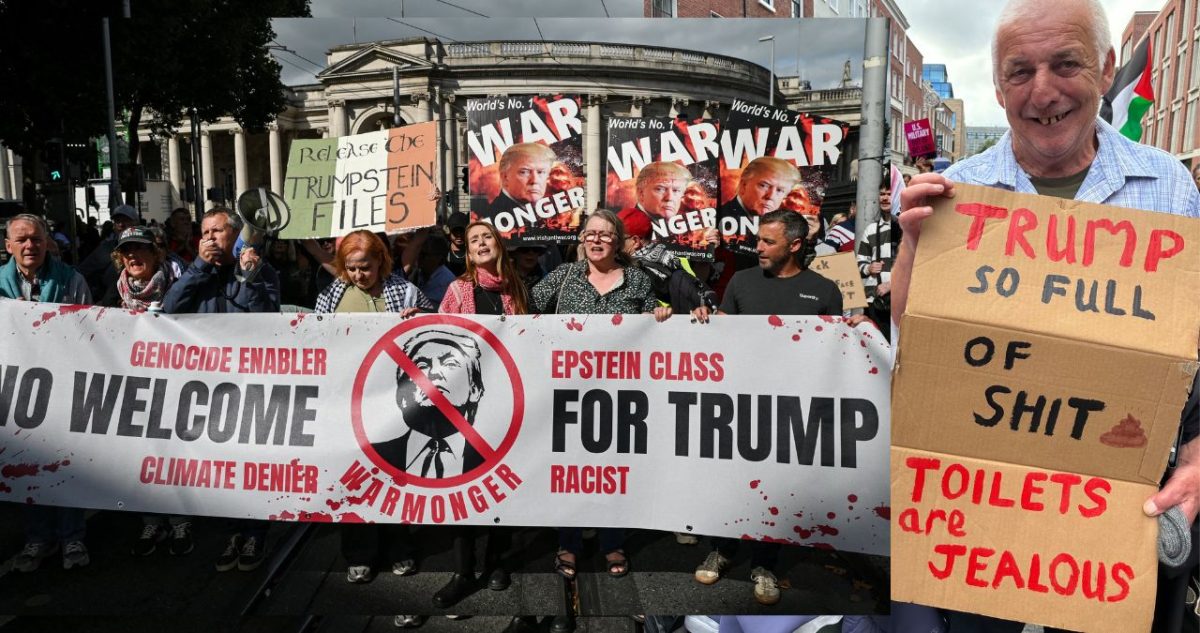

When Thousands March, the Signal Is Hard to Ignore
So you build a platform that connects billions, optimize an algorithm that shapes what people see, and then watch as thousands of them take to the streets chanting about a US president. That is not a bug in the system; it is the system responding to something deeper. In Dublin, the message was unmistakable: “Donald Trump, can you hear? We don’t want you here.” The chant echoed through the city like a notification you cannot swipe away.
For those of us who spend our days debugging code or debating architecture, political protests can feel like a different stack entirely. But they are not. They are data points in a larger network of public sentiment, and this one had high latency written all over it. The frustration was not just about one leader; it was about a feeling of being unheard in a world increasingly mediated by screens and feeds.
Why This Matters to the Builders and Breakers
Tech workers, especially in Ireland, sit at a strange intersection. Many of the world’s largest platforms have European headquarters in Dublin, which means the people marching outside might be the same ones moderating content, writing policy, or shipping features that affect millions. When they say “not welcome,” they are not just talking to a politician. They are talking to a system that often treats civic voice as noise to be filtered.
Consider how a protest spreads. It starts with a few posts, gets amplified by shares, then hits a critical mass that no algorithm can suppress. That is organic reach in its rawest form. The Dublin rally was not a trending topic on a corporate dashboard; it was a real-world stress test of whether platforms actually reflect the communities they claim to serve.
And here is the uncomfortable part: many developers I know would rather refactor a legacy codebase than engage with politics. Fair enough. But ignoring the political layer of technology is like ignoring security vulnerabilities because they are inconvenient. Eventually, someone exploits them, and the blast radius is huge.
The Chant as a Debug Log
“Can you hear?” is not a rhetorical question. It is a diagnostic. In software, when a user says “the app is broken,” you dig into logs, reproduce the issue, and fix the root cause. In democracy, when thousands say “we don’t want you here,” the root cause is often a disconnect between decision-makers and the lived experience of ordinary people. The chant is the error message. The rally is the stack trace.
You might argue that protests do not change anything. But they change the signal-to-noise ratio. They force media, politicians, and yes, tech companies to pay attention. For a tech blog, the lesson is simple: if your platform cannot distinguish between genuine grassroots sentiment and astroturfing, you have a classification problem. And classification problems have real-world consequences, from election interference to algorithmic bias.
What Dublin Reveals About the Future of Digital Protest
Ireland has become a regulatory heavyweight in tech, thanks to GDPR and the upcoming AI Act. A protest against a US president on Irish soil is not just local news. It is a reminder that data protection, content moderation, and political speech are all tangled together. The next time you push a privacy update or tweak a recommendation engine, remember that someone, somewhere, might be chanting about it.
There is also a generational story here. Younger developers and engineers are increasingly unwilling to separate their craft from their values. They ask harder questions about who benefits from a feature, who gets silenced by a policy, and whether the company’s mission statement holds up under pressure. That is not naivety. That is long-term thinking.
Could a protest like this have happened without social media? Absolutely, but it would have looked different. Slower, smaller, less viral. The fact that it happened so quickly and visibly is a testament to how digital tools amplify offline action. The same tools that can spread misinformation can also spread dissent. You do not get to pick only the wholesome outcomes.
Lessons for the Tech Community
First, do not dismiss political unrest as “not our problem.” If you build communication tools, it is your problem. If you design algorithms that decide what people see, it is your problem. If you work for a company that profits from attention, it is your problem. The lines between tech and politics are not blurry; they are nonexistent.
Second, listen to the chants. Not literally, perhaps, but metaphorically. When users say they feel unheard, that is a product flaw. When citizens say they feel ignored, that is a democratic flaw. And when both happen at once, you get a rally outside your European headquarters. No amount of PR spin can patch that.
Third, remember that trust is not a feature you can ship in a sprint. It is built over years and lost in seconds. The Dublin protest did not happen in a vacuum. It was the cumulative result of many people feeling that their voices did not matter. Tech did not cause that, but tech can either amplify the problem or help solve it. The choice is ours.
A Forward-Looking Insight
The next wave of innovation will not be judged solely by speed, scale, or revenue. It will be judged by whether it strengthens or weakens the social fabric. If you can build a system that detects and responds to genuine public sentiment without drowning in toxicity, you will have built something rare. That is not just good engineering. It is good citizenship. And in a world where chants echo both on the street and in the feed, the ability to truly hear is the most valuable feature of all.