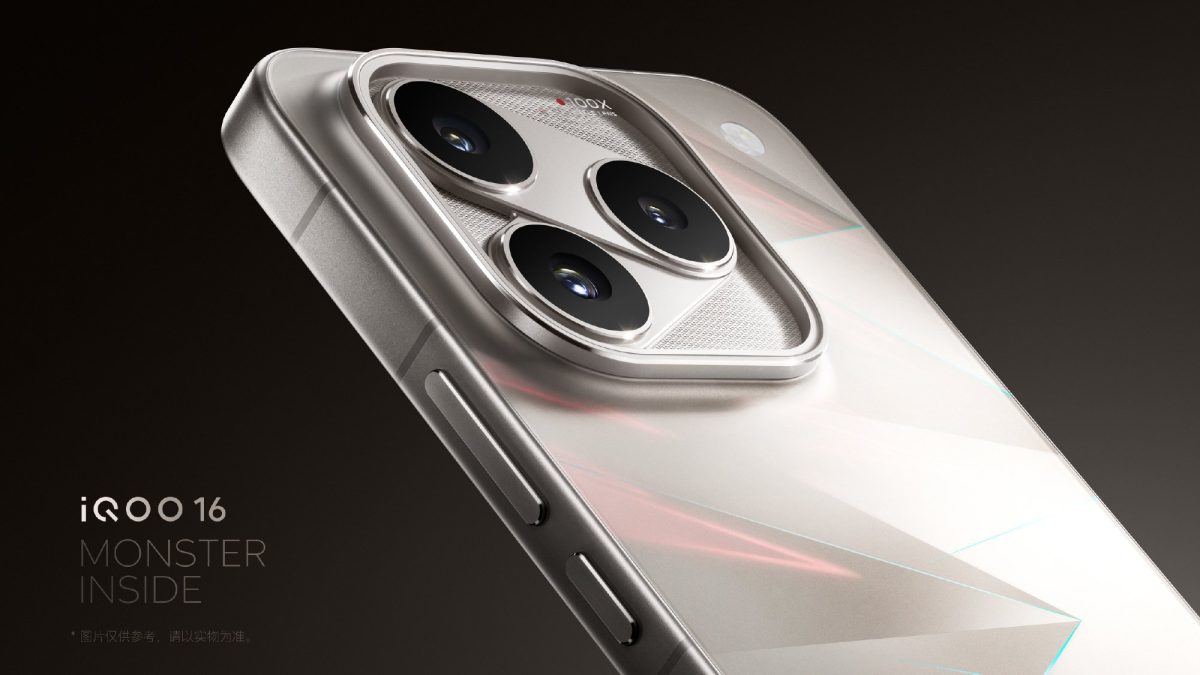

Remember when 120Hz felt like overkill? Those were simpler times. At a joint screen technology event with Samsung Display, iQOO has officially confirmed that its upcoming iQOO 16 flagship will be the first smartphone in the world to pack a 2K resolution OLED panel running at a blistering 165Hz refresh rate. This isn’t just another spec bump for the sake of a spec sheet. It’s a genuine leap that could reshape how we think about mobile displays.
Why 2K at 165Hz Is a Bigger Deal Than It Sounds
Most flagship phones today offer either a sharp 2K display at 120Hz or a 1080p panel at 165Hz. You rarely get both. The iQOO 16 breaks that trade-off by combining ultra-high resolution with an ultra-fast refresh rate in a single OLED screen. That means you no longer have to choose between crisp text and buttery-smooth scrolling. You get both, simultaneously, without compromise.
For developers, this opens up new possibilities for high-fidelity gaming and UI animations. For everyday users, it translates to a noticeably more responsive feel, especially when swiping through social feeds or playing fast-paced titles. The difference between 120Hz and 165Hz is subtle but real. Once you see it, going back feels like dragging your finger through wet cement.
Samsung’s M16 Material and 2K LEAD 2.0 Architecture Explained
The magic behind this display comes from two key technologies. First, Samsung’s next-generation M16 luminescent material, which boosts brightness and color accuracy while improving power efficiency. Second, the 2K LEAD 2.0 architecture, a redesigned pixel layout that allows for higher resolution without sacrificing refresh rate or increasing power draw too much.
Think of it like upgrading from a two-lane highway to a four-lane one, but without widening the road. The M16 material is the smoother asphalt, while LEAD 2.0 is the smarter traffic system. Together, they let more data flow through the same physical space. That’s why iQOO can push 2K at 165Hz without turning the phone into a handheld space heater.
What This Means for Mobile Gaming and Content Consumption
High refresh rates matter most in gaming, where every millisecond counts. At 165Hz, the display refreshes 165 times per second, which is nearly three times faster than a standard 60Hz screen. Combine that with 2K resolution and you get visuals that are both razor-sharp and incredibly fluid. It’s the kind of upgrade that makes you want to replay your favorite games just to see them again.
But it’s not just about gaming. Scrolling through photos, watching HDR video, even reading text becomes more pleasant. The higher pixel density makes fonts look like printed ink rather than digital approximations. And the faster refresh rate reduces motion blur, which can help with eye strain during long sessions. Your retinas will thank you, even if your wallet might not.
The Competitive Landscape: Who Else Is in the Race?
iQOO isn’t the only brand chasing display supremacy. Samsung, OnePlus, and Xiaomi have all teased similar advancements. But iQOO beat them to the punch by securing Samsung Display’s latest panel tech first. That’s a strategic win for a brand that has often been seen as a value player rather than a premium innovator.
Of course, having the best display doesn’t guarantee success. Battery life, cooling, and software optimization all play critical roles. A 2K 165Hz screen can drain power quickly if not managed well. iQOO will need to prove that its battery and thermal systems can keep up. Early rumors suggest a 5,500mAh battery and advanced vapor chamber cooling, but we’ll have to wait for official benchmarks.
What Developers Should Keep in Mind
For app and game developers, the iQOO 16 represents a new target device. If you’re building for high refresh rates, you’ll want to test your animations at 165fps to ensure they look smooth. Similarly, 2K resolution means your UI assets need to scale cleanly. Poorly optimized apps will look worse on this screen, not better. It’s a gentle nudge to raise your quality bar.
There’s also the question of adaptive refresh rate. Will the iQOO 16 dynamically switch between 1Hz and 165Hz to save battery? iQOO hasn’t confirmed details yet, but given industry trends, it’s almost certain. Developers should prepare for variable refresh rate scenarios, especially in video playback and reading modes.
Battery Life, Heat, and the Real-World Trade-Offs
Let’s address the elephant in the room. Pushing 2K resolution at 165Hz is computationally expensive, and that usually means more heat and lower battery life. Samsung’s M16 material is more efficient than previous generations, but physics still applies. You can’t light up millions of pixels 165 times per second without paying an energy cost.
iQOO’s solution likely involves a combination of smart power management and aggressive cooling. The phone may default to 120Hz or 1080p in certain apps to conserve battery. That’s not a bad thing. It’s a pragmatic approach that balances performance with longevity. The key is giving users control over when to prioritize speed over endurance.
Is 165Hz Overkill for Most People?
Honestly? For casual users, probably. Most people can’t tell the difference between 120Hz and 165Hz without a side-by-side comparison. But that’s not the point. Flagship phones are about pushing boundaries and setting new standards. Today’s overkill becomes tomorrow’s baseline. Remember when 4K TVs seemed absurd? Now they’re everywhere.
For enthusiasts and competitive gamers, though, the difference is tangible. Faster refresh rates reduce input lag and make aiming feel more precise. It’s not just about smoothness; it’s about responsiveness. And in a world where mobile esports is growing rapidly, that matters more than ever.
The Bigger Picture: What This Means for the Smartphone Industry
The iQOO 16’s display is a statement. It says that iQOO is no longer content to be a budget-friendly alternative. It wants to compete at the highest level, alongside Samsung and Apple. Whether it succeeds depends on more than just the screen, but it’s a strong opening move.
More importantly, this announcement signals that display technology is still advancing rapidly. We’re not at a plateau yet. The jump from 60Hz to 120Hz was huge. The jump from 120Hz to 165Hz is smaller but still meaningful. And the combination with 2K resolution makes it feel like a genuine generation leap rather than a marginal upgrade.
Looking ahead, expect other brands to follow suit within the next year. Samsung Display will likely supply similar panels to other manufacturers, and the race for 2K 165Hz will become the new normal. The real winners here are consumers, who get better screens without having to compromise on resolution or speed. So yes, the iQOO 16 might be the first, but it certainly won’t be the last.